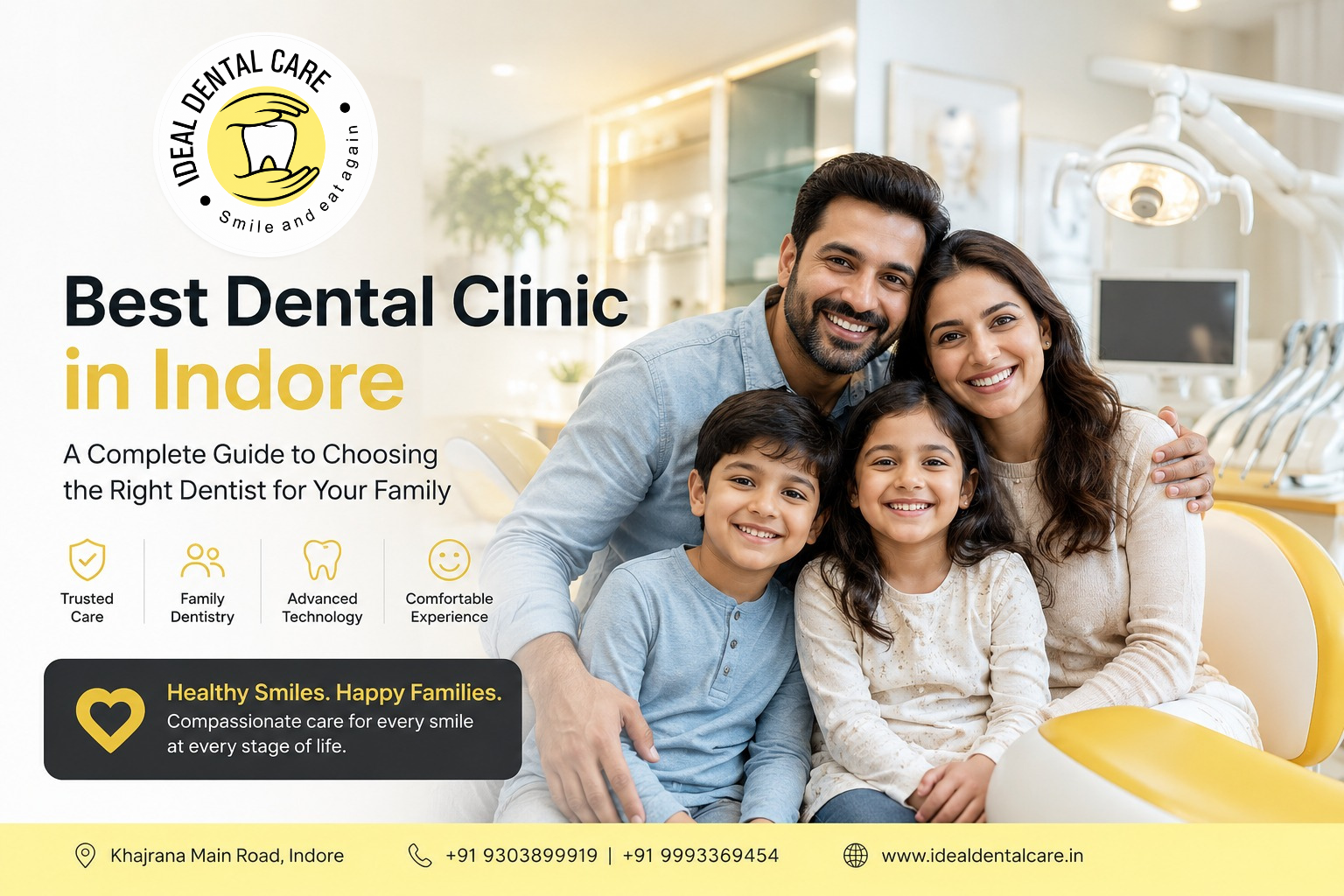
Best Dental Clinic in Indore: The Complete Patient Guide to Choosing the Right Dentist
Before You Choose a Dental Clinic, Read This
Imagine your child wakes up in the middle of the night with a severe toothache. Or perhaps your father suddenly breaks a front tooth just a few days before an important family function. Maybe you've finally decided that it's time to improve your own smile after postponing treatment for years.
What is the first thing most people do?
They open Google and search:
- Best Dental Clinic in Indore
- Best Dentist Near Me
- Dental Clinic Near Me
- Root Canal Specialist
- Dental Implant Clinic
- Family Dentist in Indore
Within seconds, dozens of clinics appear. Almost every clinic claims to be the best, most advanced, most experienced, most affordable, or most trusted. From a patient's perspective, they all look surprisingly similar. So how do you know which clinic is genuinely the right choice? Should you trust Google Reviews? Or should you compare treatment prices? Does a modern-looking clinic automatically provide better care? Or does expensive treatment always mean better treatment? How important are advanced technologies like Digital X-rays, CBCT, or Intraoral Scanners?
And perhaps the biggest question:
How do you choose a dentist you can trust with your family's oral health for the next 10 or 20 years?
That's exactly why this guide was created.
Why This Guide Is Different
Most articles you'll find online do one of two things: Either they simply list a few dental clinics, or they are written primarily to promote a specific clinic. Neither approach truly helps patients make informed decisions.
This guide has a different purpose.
Rather than telling you which clinic is the best, it explains how to identify a high-quality dental clinic using objective, practical criteria. Whether you eventually choose Ideal Dental Care or another clinic, our goal is simple:
We want you to choose confidently—not blindly.
Think of this article as a buyer's guide for dental care—designed to help you make one of the most important healthcare decisions with confidence.
If you're searching for the best dental clinic in Indore, don't choose a clinic based only on advertisements, discounts, or online ratings.
Instead, look for a clinic that offers:
- Qualified and experienced dentists
- Comprehensive dental services
- Modern diagnostic technology
- Strict sterilization protocols
- Transparent treatment planning
- Ethical recommendations
- Comfortable patient experience
- Positive long-term patient feedback
- Preventive, evidence-based dental care
The best dental clinic is one that helps you maintain healthy teeth for years—not just treat today's problem.
Table of Contents
- Why Choosing the Right Dental Clinic Matters
- What Makes a Dental Clinic Truly Outstanding?
- The Ultimate 15-Point Patient Checklist
- Modern Dental Technology Explained
- Questions Every Patient Should Ask Before Treatment
- Common Mistakes Patients Make
- How to Compare Two Dental Clinics Like an Expert
- Understanding Dental Treatment Costs
- Family Dental Care Guide
- Red Flags You Should Never Ignore
- Frequently Asked Questions
- Why Patients Choose Ideal Dental Care
- Final Thoughts
Why Choosing the Right Dental Clinic Matters More Than You Think
Most people don't think about their dentist until something starts hurting. Unfortunately, dental problems rarely appear overnight. A tiny cavity often begins months before you notice discomfort. Gum disease can develop gradually without causing pain during its early stages. A small crack in a tooth may seem harmless until it suddenly fractures while eating.
By the time symptoms become severe, treatment is often more complex than it would have been if the problem had been identified earlier.
This is why choosing the right dental clinic is about much more than treating pain. It's about building a long-term relationship with a dental team that helps you prevent problems before they become emergencies.
A high-quality dental clinic doesn't simply repair damaged teeth. It helps patients understand their oral health, prevent future dental problems, and preserve natural teeth whenever possible.
Your Smile Is Connected to Your Overall Health
Many people think oral health and general health are completely separate. They are not. Your mouth is part of your body, and maintaining good oral health contributes to your overall well-being.
Healthy teeth and gums make it easier to:
- Eat a balanced diet
- Speak comfortably
- Smile with confidence
- Maintain good nutrition
- Support long-term oral function
Regular dental check-ups can also help identify oral health issues at an early stage, allowing timely treatment and better outcomes. For this reason, choosing the right dental clinic is an investment not only in your smile but also in your overall quality of life.
Expert Tip
Don't ask, "Which clinic is the cheapest?"
Ask, "Which clinic will still be taking good care of my family's oral health ten years from now?"
That single question often leads to a much better decision.
What Makes a Dental Clinic Truly Outstanding?
Every dental clinic wants to be known as "the best." But what does "best" actually mean?
Is it a beautiful reception area? The latest technology? Hundreds of Google reviews? Affordable pricing?
The truth is that no single factor determines the quality of a dental clinic. A truly outstanding clinic combines clinical expertise, patient safety, ethical treatment planning, modern technology, and compassionate care.
Let's look at each of these factors in detail.
1. Qualified and Experienced Dentists
The dentist is the most important part of any dental clinic. Modern equipment is valuable, but technology can only support the knowledge and judgement of the clinician using it.
When choosing a dentist, consider their educational qualifications and years of clinical experience. You might also want to know their area of expertise to decide whether to approach them or not.
Remember, different dentists may have additional training in different areas.
For example:
Dental Need
Professional Commonly Involved
Routine Check-up
General Dentist
Dental Implants
Implantologist / Oral & Maxillofacial Surgeon
Braces & Clear Aligners
Orthodontist
Complex Root Canal
Endodontist
Smile Makeover
Cosmetic Dentist (depending on treatment)
Wisdom Tooth Removal
Oral Surgeon (depending on complexity)
A good clinic will recommend the most appropriate clinician for your specific treatment rather than trying to perform every procedure the same way.
2. Honest Diagnosis Before Treatment
One of the biggest signs of a trustworthy dental clinic is how they explain your condition.
Before recommending treatment, your dentist should help you understand the problem and the reason for its development. They will also tell you whether it needs immediate attention and the benefits and limitations of each treatment option.
Good communication helps patients make informed decisions and builds long-term trust.
3. Modern Dental Technology
Dentistry has changed significantly over the past decade. Modern technology can improve diagnosis, treatment planning, and patient comfort. However, technology should never be viewed as a replacement for clinical expertise.
Instead, it should support better decision-making.
Some technologies commonly found in modern dental clinics include:
Technology
How It Benefits Patients
Digital X-rays
Faster imaging with lower radiation than many traditional systems
Intraoral Scanner
More comfortable digital impressions for many procedures
CBCT (3D Imaging)
Detailed planning for implants and complex treatments
Rotary Endodontics
Improved precision during many root canal procedures
CAD/CAM Technology
Accurate design and fabrication of dental restorations
Digital Smile Design
Better visualization for cosmetic treatment planning
Not every patient requires every technology, but a clinic that invests in appropriate modern tools often has greater flexibility in diagnosis and treatment planning.
4. Strict Sterilization and Infection Control
This is one of the most important aspects of dental care—and one that many patients overlook. Every patient deserves treatment in a clean and safe clinical environment. Professional dental clinics follow established infection-control protocols to reduce the risk of cross-contamination.
Signs of a well-maintained clinic include:
✅ Clean treatment rooms
✅ Sterilized instruments
✅ Proper hand hygiene
✅ Use of appropriate personal protective equipment
✅ Organized clinical workflow
✅ Clear emphasis on patient safety
Never hesitate to ask how instruments are sterilized. A reputable clinic will be happy to explain its infection-control procedures.
5. Comprehensive Dental Care Under One Roof
Imagine taking your child to one clinic for a routine check-up, visiting another clinic for your own root canal treatment, and then travelling to a third clinic for your parents' dental implants.
Managing dental care becomes much easier when a clinic provides a broad range of services.
Many comprehensive dental clinics offer:
- Dental Check-ups
- Professional Teeth Cleaning
- Tooth-Coloured Fillings
- Root Canal Treatment
- Dental Crowns
- Dental Bridges
- Dental Implants
- Smile Makeovers
- Clear Aligners
- Teeth Whitening
- Kids Dentistry
- Wisdom Tooth Removal
- Emergency Dental Care
Having these services available under one roof often improves convenience and continuity of care.
6. Personalized Treatment Planning
No two patients have the same oral health needs. A treatment plan should be based on the patient’s age, their medical history, oral health condition, functional needs, budget, and long-term health objectives. Personalized care helps ensure that recommendations are appropriate for your individual circumstances rather than following a one-size-fits-all approach.
7. Transparent Communication About Costs
Cost is an important part of every healthcare decision. Patients should understand the treatment thoroughly. Why it is recommended, what the cost is, whether there are any alternative options, etc.
Transparent discussions about treatment planning and costs help patients make informed decisions without feeling pressured.
Expert Insight
The best dentists don't simply tell patients what to do—they help patients understand why a treatment is recommended.
That difference transforms a dental visit into a partnership based on trust and education.
Quick Self-Assessment
Ask yourself these questions after visiting a dental clinic:
Question
Yes
No
Did I understand my diagnosis?
☐
☐
Were different treatment options explained?
☐
☐
Did I feel comfortable asking questions?
☐
☐
Was the clinic clean and well organized?
☐
☐
Did the dentist listen to my concerns?
☐
☐
Was there any unnecessary pressure to start treatment immediately?
☐
☐
Would I confidently bring my family here?
☐
☐
If you answered "Yes" to most of these questions, you've likely found a clinic that values patient-centred care.
Did You Know?
Many dental problems can be treated more conservatively when detected early.
Routine dental examinations don't just identify cavities—they can also help detect gum disease, worn restorations, bite problems, and other oral health concerns before they become more complicated.
Regular preventive care is often one of the most valuable investments you can make in your oral health.
The Ultimate 15-Point Patient Checklist Before Choosing a Dental Clinic
Finding the right dental clinic doesn't have to be confusing. Instead of relying on advertisements or choosing the first clinic that appears on Google, use this practical checklist.
Think of it as a quality inspection guide—similar to what you might use before buying a home or choosing a hospital. If a clinic meets most of these criteria, you're more likely to receive safe, ethical, and patient-focused dental care.
✅ 1. Does the Dentist Listen Before Recommending Treatment?
The consultation should begin with understanding your concern, not immediately suggesting treatment. A good dentist will ask questions such as:
- What brought you here today?
- How long have you had this problem?
- Have you experienced similar issues before?
- Are you taking any medications?
- Do you have any medical conditions that could affect treatment?
Listening carefully is often the first sign of good clinical practice.
✅ 2. Is Your Diagnosis Clearly Explained?
You should never leave a consultation wondering:
"What exactly is wrong with my tooth?"
A trustworthy dentist explains:
- What the problem is
- Why it happened
- How serious it is
- Whether treatment is urgent
- What could happen if it is ignored
Understanding your diagnosis helps you make informed decisions rather than simply agreeing to treatment because you're anxious or in pain.
✅ 3. Are Multiple Treatment Options Discussed?
In many situations, more than one treatment approach may be appropriate. For example, a damaged tooth might be managed differently depending on the amount of remaining tooth structure, the condition of the surrounding gums, and your oral hygiene. A patient-centred clinic discusses suitable alternatives whenever appropriate and explains the advantages and limitations of each option.
✅ 4. Does the Clinic Focus on Saving Natural Teeth?
One of the core principles of modern dentistry is to preserve the natural tooth whenever possible.
While tooth replacement options such as implants and bridges can be excellent solutions in the right circumstances, preserving healthy natural teeth is generally the preferred approach when clinically appropriate.
This reflects a conservative and evidence-based treatment philosophy.
✅ 5. Is Preventive Care Given Importance?
The best dentists don't just treat disease; instead, they help prevent it. Preventive dental care may include:
- Regular examinations
- Professional cleaning
- Fluoride recommendations when appropriate
- Dietary guidance
- Early diagnosis of developing problems
Preventive care can reduce the likelihood of more complex treatment in the future.
✅ 6. Does the Clinic Invest in Continuing Education?
Dentistry continues to evolve with new materials, techniques, and technologies. Clinicians who regularly update their knowledge are better positioned to provide care based on current evidence and accepted standards. As a patient, it's perfectly reasonable to ask whether your dentist regularly attends professional training or continuing education programmes.
✅ 7. Are Modern Diagnostic Tools Available?
A thorough diagnosis often requires more than a visual examination. Depending on your condition, the dentist may recommend appropriate imaging or digital diagnostic tools to understand the problem and plan treatment more effectively. Technology should support accurate diagnosis—not replace careful clinical examination.
✅ 8. Is the Treatment Plan Personalized?
No two smiles are identical. Your treatment plan should be based on your age, oral health, medical history, and lifestyle. A personalized treatment should demonstrate options that are based on your needs—not a standard template.
✅ 9. Are Costs Explained Transparently?
Before beginning treatment, you should understand:
- What treatment has been recommended
- What the estimated fees include
- Whether there are alternative options
- How many appointments may be required
Transparent communication helps prevent misunderstandings later.
✅ 10. Is Infection Control Taken Seriously?
Patient safety should always be a priority. Look for signs of a clinic that values hygiene:
- Clean treatment rooms
- Organized instrument handling
- Appropriate use of gloves and masks
- Clearly maintained clinical cleanliness
A professional clinic is usually happy to explain how patient safety is maintained.
✅ 11. Does the Clinic Respect Your Time?
Long waiting times may occasionally be unavoidable in healthcare. However, a well-managed clinic generally values punctual appointments, clear communication, and efficient scheduling.
Respecting a patient's time reflects professionalism.
✅ 12. Is Emergency Care Available?
Dental emergencies can occur without warning. Severe toothache, broken tooth, facial swelling, dental injury, and knocked-out tooth are some of the common emergencies that dentists deal with on a regular basis.
Knowing that your clinic can provide timely guidance during emergencies offers reassurance, especially for families with children or older adults.
✅ 13. Does the Clinic Provide Follow-Up Care?
Treatment doesn't always end when you leave the clinic. Follow-up appointments are as important as the treatment. They allow monitoring healing along with evaluating treatment success. Dentists can address any concerns that may arise after and give oral hygiene advice accordingly. Good follow-up care reflects a long-term commitment to patient health.
✅ 14. Do Patient Reviews Reflect Real Experiences?
Online reviews should be read thoughtfully. Instead of focusing only on the overall rating, look for comments about communication, professionalism, comfort, treatment explanation, cleanliness, and long-term satisfaction. Authentic reviews often describe specific experiences rather than using only general praise.
✅ 15. Would You Feel Comfortable Recommending This Clinic to Your Family?
Perhaps the simplest question of all. Imagine your parents, spouse, or child needed dental treatment tomorrow. Would you confidently recommend this clinic?
If the answer is yes, that's often a strong indication that you've found a practice you trust.

Printable Patient Scorecard
You can use this scorecard during your consultation.
Evaluation Criteria
Score (1–5)
Dentist's Communication
⭐⭐⭐⭐⭐
Professionalism
⭐⭐⭐⭐⭐
Hygiene & Sterilization
⭐⭐⭐⭐⭐
Technology
⭐⭐⭐⭐⭐
Treatment Explanation
⭐⭐⭐⭐⭐
Comfort
⭐⭐⭐⭐⭐
Transparency
⭐⭐⭐⭐⭐
Overall Confidence
⭐⭐⭐⭐⭐
A clinic that consistently scores well across all categories is more likely to provide a positive long-term experience.
Myth vs Fact
Myth
Fact
The most expensive dentist is always the best.
Price alone does not determine the quality of care.
If a tooth doesn't hurt, it doesn't need treatment.
Many dental problems develop without pain in their early stages.
Modern technology alone guarantees better treatment.
Technology supports treatment, but the dentist's expertise remains the most important factor.
Google ratings tell the whole story.
Reviews are useful, but they should be considered alongside qualifications, communication, and patient experience.
Every patient needs the same treatment.
Dental care should always be personalized based on individual needs.
Expert Advice
Choose a dentist you trust enough to return to for regular check-ups—not just someone you visit when you're in pain.
Long-term relationships with a trusted dental team often lead to better oral health outcomes than seeking treatment only during emergencies.
Questions Every Patient Should Ask Before Starting Dental Treatment
Many people feel nervous during their first dental consultation. As a result, they often forget to ask important questions and simply agree to the proposed treatment.
Remember:
A good dentist never gets irritated when a patient asks questions. In fact, informed patients usually have a better treatment experience because they understand what to expect. Before starting any dental procedure, consider asking the following questions.
About Your Diagnosis
1. What exactly is my dental problem?
Understanding the diagnosis is the foundation of every treatment decision.
Ask your dentist to explain:
- Which tooth or teeth are affected?
- How serious is the condition?
- Is it reversible?
- Has it reached an advanced stage?
You should leave the consultation knowing exactly what is happening inside your mouth.
2. Why did this happen?
Understanding the cause helps prevent the same problem from happening again.
Possible causes may include:
- Tooth decay
- Gum disease
- Teeth grinding
- Trauma
- Poor oral hygiene
- Dietary habits
- Misaligned teeth
Treating the cause—not just the symptom—is an important part of long-term oral health.
3. Is Treatment Urgent?
Not every dental condition requires immediate treatment.
Ask:
- Can I safely wait?
- What are the risks of delaying treatment?
- How quickly could the condition progress?
This helps you prioritise treatment appropriately.
About Treatment Options
4. What Are My Options?
Many dental conditions have more than one acceptable treatment approach. For example, a missing tooth may have different replacement options depending on your oral health and individual circumstances.
Rather than asking:
"What's the cheapest treatment?"
Ask:
"Which option is likely to be the most appropriate for my long-term oral health, and why?"
Understanding the reasoning behind a recommendation is often more valuable than comparing prices alone.
5. Why Do You Recommend This Treatment?
Every recommendation should have a clear clinical reason.
Your dentist should explain:
- Why this option is suitable
- What benefits it offers
- What limitations it has
- What alternatives exist
Good treatment planning is based on evidence—not assumptions.
6. What Happens If I Delay Treatment?
Some conditions remain stable for a period of time. Others can progress rapidly. Understanding the possible consequences of postponing treatment allows you to make an informed decision based on your situation.
About the Procedure
7. How Will the Procedure Be Performed?
Knowing what to expect reduces anxiety.
Ask about:
- Number of appointments
- Estimated treatment time
- Type of anaesthesia (if required)
- What happens during each visit
Clear expectations often make patients feel much more comfortable.
8. Will the Procedure Be Painful?
Many people avoid dental treatment because of fear. Modern dentistry includes techniques and anaesthesia designed to make many procedures as comfortable as possible. Rather than relying on stories from friends or social media, discuss your concerns directly with your dentist.
9. What Should I Expect Afterwards?
Recovery varies depending on the procedure. Always ask about eating, drinking, and brushing instructions, as they greatly affect our oral health. Take medications as prescribed and continue follow-up visits until the dentist confirms completion. Knowing what is normal during recovery helps reduce unnecessary worry.
10. How Can I Protect My Investment?
Whether you've had a filling, crown, implant, or cosmetic treatment, long-term success depends on proper care.
Simple habits such as:
- Brushing twice daily
- Cleaning between teeth
- Limiting sugary foods and drinks
- Wearing a mouthguard if recommended
- Attending regular dental check-ups
can contribute significantly to maintaining your oral health.
Decision Framework: Which Type of Dental Clinic Do You Need?
Not every patient requires the same type of dental care.
Use this simple guide.
Your Need
Recommended Focus
Routine check-up
Family dental clinic
Toothache
Comprehensive diagnostic care
Missing teeth
Implant consultation
Crooked teeth
Orthodontic assessment
Smile improvement
Cosmetic dentistry consultation
Child's first dental visit
Pediatric-friendly dental care
Dental emergency
Clinic offering prompt emergency care
The key is to choose a clinic with experience in the treatment you actually need.
Understanding Dental Treatment Costs
One of the most common questions patients ask is:
"Why does the cost of the same treatment vary between clinics?"
The answer is that dental treatment involves much more than the procedure itself. The cost of the same treatment varies due to the complexity of the case, clinical expertise, technology, and materials used. Instead of comparing only the final fee, ask:
"What is included in my treatment plan?"
A transparent explanation is usually a sign of a patient-focused clinic.
Cost vs Value
Many people confuse cost with value.
Lowest Cost
Highest Value
Focuses only on today's expense
Considers long-term oral health
May ignore preventive care
Emphasizes prevention
Short-term thinking
Long-term planning
Decision based on price
Decision based on quality and suitability
The goal is not to choose the cheapest option or the most expensive one, but to choose that best meets your clinical needs and long-term oral health goals.
Expert Advice
Never feel embarrassed about asking questions during a dental consultation.
The consultation is your opportunity to understand your oral health, discuss your concerns, and make an informed decision.
A dentist who encourages questions is often a dentist who values patient education and long-term trust.
How to Compare Two Dental Clinics Like an Expert
Suppose you've shortlisted two dental clinics in Indore. Both have good Google ratings. Both have modern websites. Both claim to use advanced technology.
Which one should you choose?
Instead of relying on advertisements or ratings alone, compare them using a structured approach.
The SMART Comparison Method
Evaluate every clinic using these five areas.
S — Skills
Ask yourself:
- Are the dentists qualified?
- Do they have experience in the treatment I need?
- Do they explain procedures confidently?
- Do they encourage questions?
Clinical expertise should always come before marketing.
M — Modern Technology
Technology should improve diagnosis and treatment planning.
Look for:
- Digital X-rays
- Intraoral scanners
- CBCT (when appropriate)
- Rotary endodontics
- Digital treatment planning
Technology should support clinical judgement—not replace it.
A — Approach
Observe how the clinic approaches patient care.
Do they:
- Listen carefully?
- Explain treatment options?
- Discuss preventive care?
- Respect your concerns?
- Avoid unnecessary pressure?
The way a clinic communicates often reflects its overall philosophy.
R — Reputation
Instead of looking only at the star rating, look for repeated comments about:
- Professionalism
- Cleanliness
- Communication
- Comfort
- Ethical treatment
- Long-term satisfaction
Patterns matter more than isolated reviews.
T — Trust
This is perhaps the most important factor. After your consultation, ask yourself:
Do I genuinely trust this dentist?
Trust cannot be measured by technology or price. It is built through communication, honesty, and professionalism.
Dental Clinic Comparison Scorecard
Print or save this checklist before visiting clinics.
Criteria
Clinic A
Clinic B
Qualified dentists
⭐⭐⭐⭐⭐
⭐⭐⭐⭐⭐
Clear diagnosis
⭐⭐⭐⭐⭐
⭐⭐⭐⭐⭐
Treatment explanation
⭐⭐⭐⭐⭐
⭐⭐⭐⭐⭐
Modern technology
⭐⭐⭐⭐⭐
⭐⭐⭐⭐⭐
Hygiene & sterilization
⭐⭐⭐⭐⭐
⭐⭐⭐⭐⭐
Comfortable environment
⭐⭐⭐⭐⭐
⭐⭐⭐⭐⭐
Transparent pricing
⭐⭐⭐⭐⭐
⭐⭐⭐⭐⭐
Emergency support
⭐⭐⭐⭐⭐
⭐⭐⭐⭐⭐
Follow-up care
⭐⭐⭐⭐⭐
⭐⭐⭐⭐⭐
Overall confidence
⭐⭐⭐⭐⭐
⭐⭐⭐⭐⭐
When your decision is based on objective criteria rather than emotions, you're more likely to choose a clinic that suits your needs.
Common Mistakes Patients Make
Even well-informed patients sometimes make avoidable mistakes. Being aware of them can save you time, money, discomfort, and unnecessary dental procedures in the future.
Mistake #1 – Choosing a Clinic Only Because It's the Cheapest
Cost is an important consideration, but it shouldn't be the only deciding factor.
Before comparing prices, understand:
- What treatment is actually being recommended?
- Which materials will be used?
- How many appointments are included?
- Is follow-up care part of the treatment plan?
- What are the expected long-term results?
Healthcare decisions are rarely about finding the lowest price—they're about finding the most appropriate solution.
Mistake #2 – Waiting Until the Pain Becomes Severe
One of the biggest misconceptions in dentistry is:
"If it doesn't hurt, it can't be serious."
In reality, many dental conditions such as early tooth decay, gum disease, worn fillings, small cracks in teeth, and bite-related problems progress silently. Routine dental examinations help identify these issues before they become emergencies.
Mistake #3 – Believing Social Media More Than Clinical Advice
Short videos and social media posts can be educational, but they are rarely tailored to your individual oral health. Treatments that work well for one person may not be suitable for another. A clinical examination is always more valuable than general advice found online.
Mistake #4 – Ignoring Preventive Dentistry
Many patients think dental visits are only necessary when treatment is required. In reality, preventive care is one of the most effective ways to maintain oral health.
Regular examinations and professional cleaning can help reduce the risk of many oral diseases that may require heavy restorative procedures later.
Mistake #5 – Feeling Afraid to Ask Questions
Some patients worry that asking too many questions may offend the dentist. But what’s true is actually the opposite.
Dentists appreciate patients who want to understand their treatment. Good communication leads to:
- Better understanding
- Better cooperation
- Better long-term results
- Greater confidence throughout treatment
Mistake #6 – Ignoring Gum Health
Healthy gums are as important as healthy teeth. If you happen to see any of the following signs of gum disease, consult a dentist immediately:
- Bleeding while brushing
- Swollen gums
- Persistent bad breath
- Gum recession
- Loose teeth
Treating gum problems early often helps preserve natural teeth.
Family Dental Care Guide
Choosing a family dental clinic offers more than convenience. It helps create continuity of care.
When one dental team understands your family's oral health history, treatment planning often becomes more personalized.
Children
Children benefit from dental visits because they help establish healthy oral hygiene habits early in their lives. Regular examinations can monitor their tooth eruption and early cavities, and guide them with dietary habits that can completely change their oral health. Positive early experiences also reduce dental anxiety later in life.
Teenagers
Teenage years often involve changing dental needs. Common concerns include:
- Orthodontic assessment
- Wisdom tooth monitoring
- Sports mouthguards
- Oral hygiene during braces or aligners
- Diet and lifestyle advice
Adults
Adults often require a combination of preventive and restorative care. Professional cleaning, fillings, crowns, root canal treatment, teeth whitening, and tooth replacement are some of the common treatments that help maintain oral health for a long time.
Senior Citizens
As we age, oral health priorities may change. Older adults may benefit from:
- Monitoring existing restorations
- Denture maintenance
- Implant consultation where appropriate
- Dry mouth management
- Oral cancer screening when indicated
Comprehensive dental care supports both oral function and overall quality of life.
Preventive Dentistry: The Best Investment You Can Make
Many people ask:
"How can I avoid expensive dental treatment?"
The answer is surprisingly simple. Regular examinations help in diagnosing problems before they become serious. Invest in educating yourself with oral hygiene tips, diet consultation, and professional cleaning whenever necessary.
In many cases, identifying a problem early can reduce treatment complexity and help preserve natural teeth.
Did You Know?
A routine dental examination often takes less than an hour, but it can help identify conditions that might otherwise progress unnoticed for months.
Patient Decision Tree
Still unsure which type of clinic best suits your needs?
Use this simple guide.
Your Situation
What to Look For
First dental visit in years
Comprehensive examination and preventive care
Persistent toothache
Clinic with advanced diagnostic capability
Missing one or more teeth
Experience in tooth replacement options, including implants where appropriate
Crooked or crowded teeth
Orthodontic consultation
Smile improvement
Cosmetic treatment planning
Child's first dental appointment
Family-friendly environment with preventive focus
Dental emergency
Prompt assessment and emergency care availability
The goal isn't to find the clinic with the biggest advertisement. The goal is to find the clinic that's best equipped to meet your specific needs.
Expert Advice
Your relationship with a dentist should feel similar to your relationship with your family physician.
It should be based on trust, communication, preventive care, and long-term health—not just treatment during emergencies. Patients who establish this kind of relationship are often more likely to maintain healthier smiles throughout life.
Why Patients Choose Ideal Dental Care, Indore
After reading this guide, you now know what qualities define a trustworthy dental clinic. At Ideal Dental Care, our philosophy is built around these same principles. Rather than focusing only on treating dental problems, we believe in helping patients understand their oral health, make informed decisions, and maintain healthy smiles for the long term.
Our approach is based on:
- Evidence-based dentistry
- Personalized treatment planning
- Ethical recommendations
- Preventive care
- Modern digital technology
- Transparent communication
- Patient education
- Long-term oral health
Whether someone visits us for a routine dental examination or a more complex treatment, our goal remains the same:
To provide safe, comfortable, and patient-centred dental care that supports long-term oral health.
Conveniently located on Khajrana Main Road, Ideal Dental Care serves patients from across Indore, including Vijay Nagar, Palasia, Bengali Square, Rau, Bhawarkua, Nipania, Scheme No. 54, Scheme No. 78, Silicon City, and nearby areas.
Frequently Asked Questions
1. How do I choose the best dental clinic in Indore?
Look beyond advertisements and prices. Consider the dentist's qualifications, clinical experience, communication, hygiene standards, available technology, patient reviews, and whether the clinic provides comprehensive, patient-focused care.
2. How often should I visit a dentist?
For most people, a dental examination every six months is recommended. Your dentist may advise a different schedule depending on your oral health and individual risk factors.
3. Are regular dental check-ups necessary if I have no pain?
Yes. Many dental problems, including early cavities and gum disease, may not cause noticeable symptoms initially. Regular examinations help identify these conditions before they become more complex.
4. Does a higher treatment cost always mean better quality?
Not necessarily. The best choice is the treatment that is clinically appropriate, clearly explained, and tailored to your needs. Price should be considered alongside quality, experience, materials, and long-term value.
5. What questions should I ask during my first consultation?
Ask about your diagnosis, treatment options, expected outcomes, recovery, maintenance, and estimated timeline. A good dentist will welcome these questions.
6. What modern technologies should a dental clinic have?
Depending on the services offered, technologies such as digital X-rays, intraoral scanners, CBCT imaging, rotary endodontics, and CAD/CAM systems can support diagnosis and treatment planning.
7. Is it safe to delay dental treatment?
Some conditions can safely be monitored, while others may worsen if treatment is postponed. Your dentist can explain the likely consequences of waiting based on your individual situation.
8. Why is preventive dentistry important?
Preventive care helps identify problems early, maintain healthy teeth and gums, and may reduce the need for more extensive treatment in the future.
9. Can one clinic treat my entire family?
Many comprehensive dental clinics provide preventive, restorative, cosmetic, and emergency care for children, adults, and senior citizens, making long-term family care more convenient.
10. What is the most important quality in a dentist?
Clinical expertise is essential, but trust, communication, ethical treatment planning, and a commitment to patient education are equally important.
Final Thoughts
Finding the best dental clinic in Indore is about more than choosing a name from a search result. It's about choosing a team that values your health, listens to your concerns, explains your options honestly, and helps you protect your smile for years to come.
The right dental clinic doesn't simply provide treatment—it becomes your partner in maintaining lifelong oral health.
Take your time.
Ask questions.
Compare your options carefully.
Choose a clinic where you feel informed, respected, and confident. Because a healthy smile isn't created by one appointment—it's built through consistent, high-quality care over time.
Book an Appointment
If you have questions about your oral health or would like a professional dental evaluation, our team will be happy to help.
Ideal Dental Care
📍 19-Baikunth Dham,
Khajrana Main Road,
Indore – 452018, Madhya Pradesh
📞 Phone:
+91 9303899919
+91 9993369454
🌐 Website:
https://www.idealdentalcare.in
Whether you need a routine dental check-up, preventive care, cosmetic consultation, or treatment for a specific concern, scheduling an appointment allows you to receive personalized guidance based on your oral health needs.